
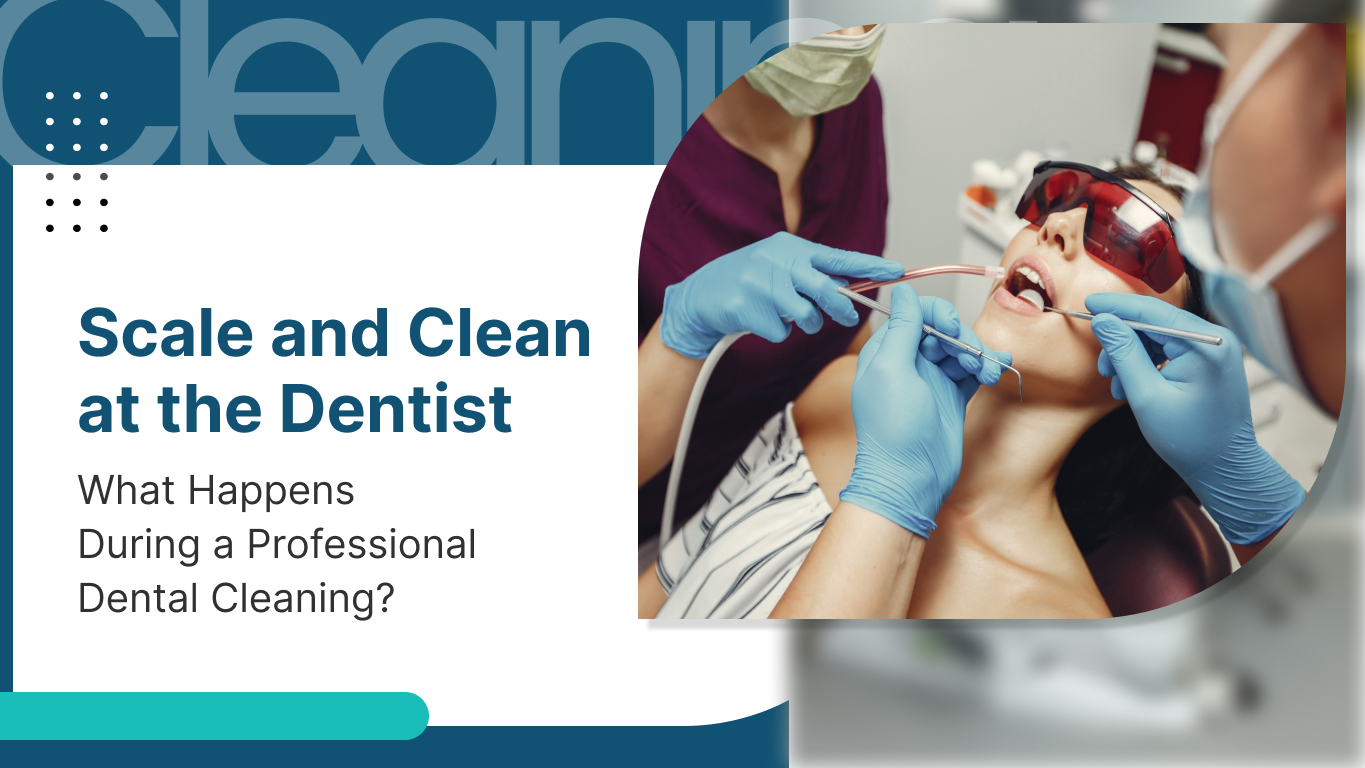
You brush your teeth twice a day, you floss, so why do you still have to go to the dentist to get your teeth cleaned? It is a reasonable question, and the answer is that even the most conscientious home routine cannot provide. A professional tooth cleaning will get to areas that your toothbrush and floss can barely reach and will remove the hardened deposits that would otherwise pose a threat to your teeth and gums. When you have a scale and clean booked but are not entirely sure of what to expect, this guide will take you through the entire process of what happens, why each procedure is necessary, and the frequency of visiting.
What is a Dental Scale and Clean?
A dental scale and clean is a preventive procedure that involves removing plaque and tartar deposits in your teeth and polishing them to give them a smooth and fresh look. The scraping away of hardened deposits is called the scale part, and the polishing and finishing is the clean part.
The bacteria that always forms on your teeth is known as plaque, which is a sticky, soft film of bacteria. It becomes hardened into tartar (also known as calculus) when not removed completely, a rough mineralised substance that sticks tenaciously to teeth and along the gumline. This is the important thing: when plaque turns into tartar, it will not move even with all the home brushing and flossing. It can only be removed by professional cleaning of the teeth using specialised instruments.
This is why a dentist visit to clean teeth is such a vital aspect of oral health. It addresses the accumulation which results in cavities, gum disease and bad breath, preventing problems before they establish themselves.
The importance of professional cleaning.
It is easy to believe that good brushing is sufficient, but professional dental cleaning can provide benefits that home care cannot:
- Prevents gum disease- Tartar on the gumline causes irritation and inflammation of the gums resulting in gingivitis and, without treatment, more severe periodontal disease.
- Lessens tooth decay- Removal of bacteria-covered plaque and tartar decreases your chances of cavities.
- Freshens breath – Bacteria that are lodged in tartar is a significant source of chronic bad breath.
- Whitens your smile – Polishing eliminates surface stains caused by coffee, tea, wine and smoking.
- Identifies issues early on- A cleaning session is a check-up and your dentist can identify problems before they become serious.
Concisely, dentist teeth cleaning is among the most economical methods of safeguarding your oral health in the long term.
Dental Cleaning: How it Works.
So, what happens when you have your teeth cleaned? Here is a guide on the average dental cleaning process in its entirety.
Step 1: Examination
Your dentist or hygienist will look at your mouth first before any cleaning is done, and this is usually done by a small mirror. They examine your teeth and gums to identify any decay, inflammation or other issues. This preliminary survey will assist them in customizing the cleaning to your requirements and indicate what may need additional consideration.
Step 2: Scaling – Removal of Plaque and Tartar
This is the core of scaling and cleaning of teeth. With a manual scaler or an ultrasonic instrument, your dental expert will gently scrape away the plaque and tartar on the sides of your teeth and the gumline. The ultrasonic scaler involves the use of fine spray of water with gentle vibrations to loosen and remove deposits whereas hand instruments are applied to remove deposits in a more precise and detailed manner.
You can hear a scratching noise and experience some pressure especially in areas where tartar has accumulated. This step of dental cleaning and scaling is typically pain-free, but the spots with more deposits or gums that are sensitive may be a bit more noticeable. The more tartar you have, the longer this stage will last – another good reason why you should not miss your regular appointments.
Step 3: Polishing
Your teeth are polished when all the tartar is removed. The dentist polishes the tooth surfaces with a rotating rubber cup or brush with a gritty polishing paste to smooth the tooth surfaces and eliminate the remaining stains on the surfaces. This leaves your teeth clean and smooth and makes it more difficult to have plaque sticking on in the future. The actual polishing is usually the best part of the appointment that patients like, the part where you begin to notice the difference.
Step 4: Flossing and Rinsing
Your dentist then flosses between all your teeth to take away any remaining debris or polishing paste and to examine any tight contacts or bleeding spots that could be an indication of a problem. You will wash your mouth to cleanse it all, and your mouth will be fresh.
Step 5: Fluoride Treatment (Optional)
Your dentist can apply fluoride depending on your needs. This assists in making tooth enamel stronger and also provides extra protection against decay in the months after your clean. The fluoride treatments are particularly useful to individuals who are susceptible to cavities.
Step 6: Advice and Next Steps
Lastly, your dentist will talk to you about what he or she discovered, provide you with specific recommendations on your brushing and flossing method, and when you should schedule your next appointment. In case they noticed something during the check-up, like premature decay or inflammation of the gums, they will explain to you the alternatives.
Does a Scale and Clean Hurt?
A scale and clean is painless and comfortable for most individuals. It may cause you to experience a little pressure or some slight sensitivity, particularly when you have a lot of tartar or inflamed gums. If your gums are sensitive or you are anxious, inform your dentist-he/she can be gentler, take a break, or apply numbing gel to make you feel comfortable. The light pains at the appointment are much better than the pain and cost of the dental issues that accumulation can lead to in the future.
Time of Duration?
An average teeth cleaning session with a professional dentist lasts 30-45 minutes, but it can be shorter or longer based on the level of tartar and the general state of your teeth and gums. When it has been a long time since the visit, it will take a bit longer.
How Often Should You Have a Scale and Clean?
In most cases, every 6 months, a dental scale and clean is recommended for the adult population. But the best frequency is determined by your personal needs. Individuals with a tendency to accumulate tartar, gum disease, smokers, and those wearing orthodontic devices might need more frequent appointments. Your dentist will prescribe a schedule that will fit your mouth. The best way to maintain healthy teeth and gums is to attend appointments regularly, and each cleaning should be faster and easier than the previous one.
Conclusion
A scale and clean is a fast, easy, and very efficient method of ensuring that your teeth and gums are not exposed to decay, gum disease, and bad breath. Professional cleaning keeps your smile healthy, bright, and fresh by eliminating the plaque and tartar that home brushing is unable to reach, and helps detect small problems before they become big ones.
In need of a scale and clean, the friendly staff at Carrum Downs Dental Clinic can assist. We have skilled, kind dentists and hygienists who will offer you a comprehensive, painless professional dental cleaning that fits your individual needs, as well as a cordial suggestion to maintain your smile at its best during the intervals. Make your appointment with Carrum Downs Dental Clinic and take care of your teeth.
Related Post –
Is Ultrasonic Teeth Cleaning Safe?