
Your baby’s first tooth is a significant milestone worth celebrating. But it’s just the beginning of an important developmental journey that will unfold over several years. Understanding the primary teeth eruption timeline can help parents know what to expect and when to seek professional advice if development seems delayed or concerning.
Understanding Primary Teeth Development
Primary teeth, often called baby teeth or deciduous teeth, are the first set of teeth to appear in a child’s mouth. Despite being temporary, these teeth play crucial roles in:
- Helping children chew nutritious foods essential for growth
- Assisting with proper speech development
- Maintaining space for permanent teeth
- Building self-confidence through a healthy smile
A complete set of primary teeth consists of 20 teeth, with 10 in each jaw. Unlike permanent teeth, which number 32 in total, primary teeth are fewer but just as important for your child’s development.
Primary Teeth Eruption Timeline
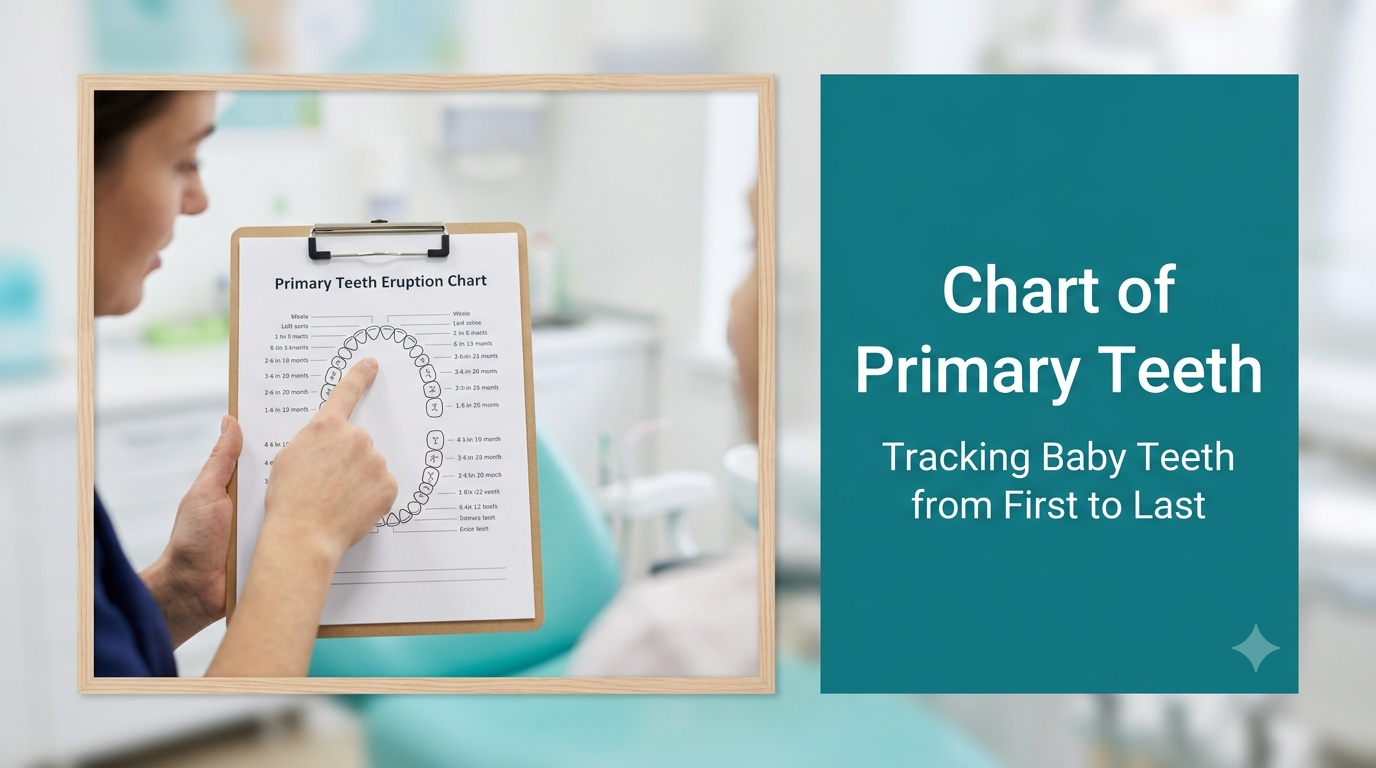
The eruption pattern of primary teeth generally follows a predictable sequence, though timing can vary from child to child. Here’s a comprehensive chart of primary teeth eruption:
Lower Teeth (Mandibular)
- Central Incisors: 6-10 months
- Lateral Incisors: 10-16 months
- First Molars: 14-18 months
- Canines: 17-23 months
- Second Molars: 23-31 months
Upper Teeth (Maxillary)
- Central Incisors: 8-12 months
- Lateral Incisors: 9-13 months
- First Molars: 13-19 months
- Canines: 16-22 months
- Second Molars: 25-33 months
Most children have all 20 of their primary teeth by age 3. It’s important to remember that this timeline represents averages, and variation of a few months is perfectly normal.
Signs of Teething
Before teeth become visible, parents may notice signs that indicate teething is underway:
- Increased drooling
- Swollen or tender gums
- Irritability or fussiness
- Reluctance to eat
- Chewing on objects
- Slight temperature elevation (not a high fever)
If your child experiences severe discomfort, high fever, or other concerning symptoms during teething, consult your family dental care dentist, as these symptoms might indicate something beyond normal teething.
Caring for Primary Teeth
Dental care should begin before the first tooth appears. Gently wiping your baby’s gums with a clean, damp cloth helps establish a routine, keeps the mouth clean, and helps reduce the risk of Gum Disease. Once teeth emerge:
- Begin brushing with a small, soft-bristled toothbrush twice daily
- Use a rice-sized smear of fluoride toothpaste for children under 3
- Schedule the first dental visit by your child’s first birthday
- Avoid putting your child to bed with a bottle containing anything other than water
- Limit sugary foods and drinks which can lead to early childhood caries
Regular Teeth Cleaning can help maintain your child’s oral health as their primary teeth develop. At Carrum Downs Dental Group, we recommend establishing a “dental home” early, where your child can receive consistent, comprehensive care tailored to their developmental needs.
The Transition to Permanent Teeth
Primary teeth begin to loosen and fall out around age 6, making way for permanent teeth. This process typically follows the same order as eruption, with lower central incisors often being the first to go.
The timeline for losing primary teeth spans several years:
- Ages 6-7: Front teeth (incisors)
- Ages 7-8: Lateral incisors
- Ages 9-11: First molars and canines
- Ages 10-12: Second molars
By age 12-13, most children have lost all their primary teeth. However, some primary molars might remain until age 14.
When to Consult a Dentist
While variations in the timeline are normal, certain situations warrant professional attention:
- No teeth by 18 months of age
- Large gaps or crowding in primary teeth
- Early tooth loss due to decay or injury
- Discoloured teeth or visible decay
- Persistent teeth grinding or jaw clenching
- Teeth that appear in an unusual order
Regular visits to a family dental care dentist can help identify and address these concerns early, potentially preventing more serious issues later.
The Importance of Professional Dental Care
Professional dental care should begin early and continue throughout childhood. At Carrum Downs Dental Group, we specialize in creating positive experiences for children while providing comprehensive dental care services:
- Regular check-ups and cleanings
- Preventive treatments like sealants and fluoride
- Education on proper brushing and flossing techniques
- Guidance on nutrition and habits that affect dental health
- Early intervention for developmental concerns
Parents can also learn more about dental care for children and the steps they can take to support good oral health at home.
Our family-centred approach means parents are included in all aspects of care, learning alongside their children how to maintain optimal oral health.
Conclusion
The journey from that first tiny tooth to a complete set of primary teeth represents an important chapter in your child’s development. By understanding the chart of primary teeth eruption, parents can better monitor this process and seek timely professional guidance when needed.
Remember that while the timeline of primary teeth development follows general patterns, each child is unique. Working with a trusted dental provider like Carrum Downs Dental Group ensures your child receives personalized care tailored to their specific developmental needs, setting the foundation for a lifetime of healthy smiles. Schedule an appointment with us today!